Compost toilets at El Zopilote eco hostel
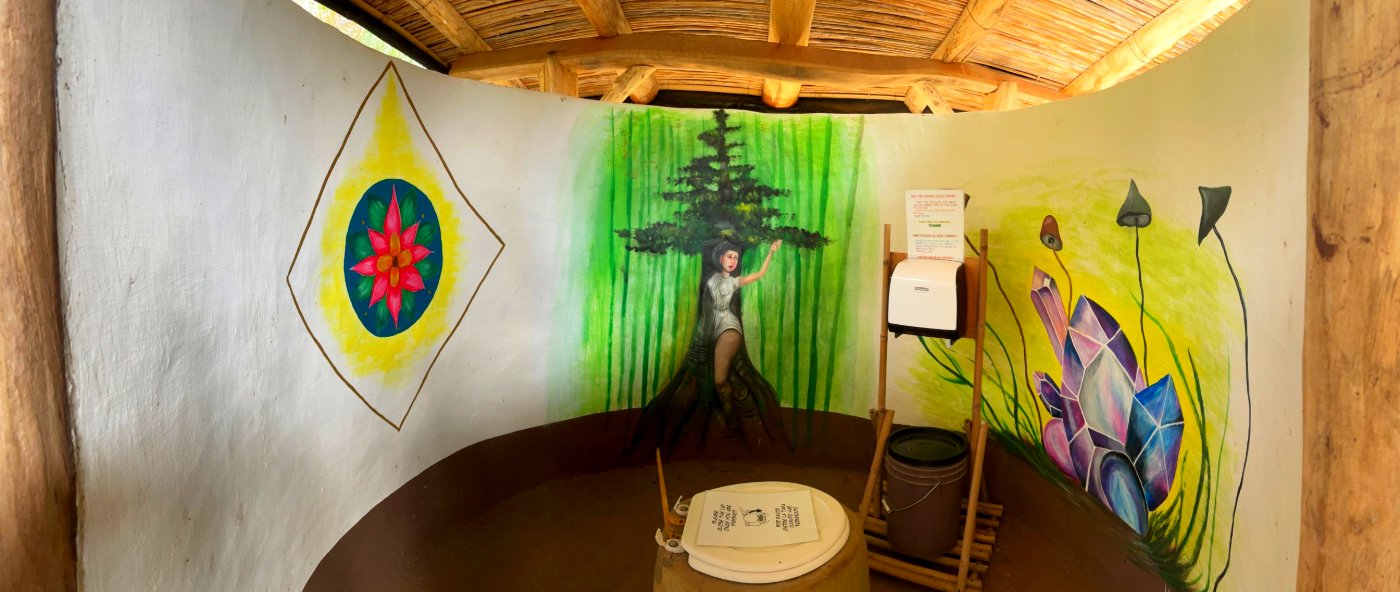
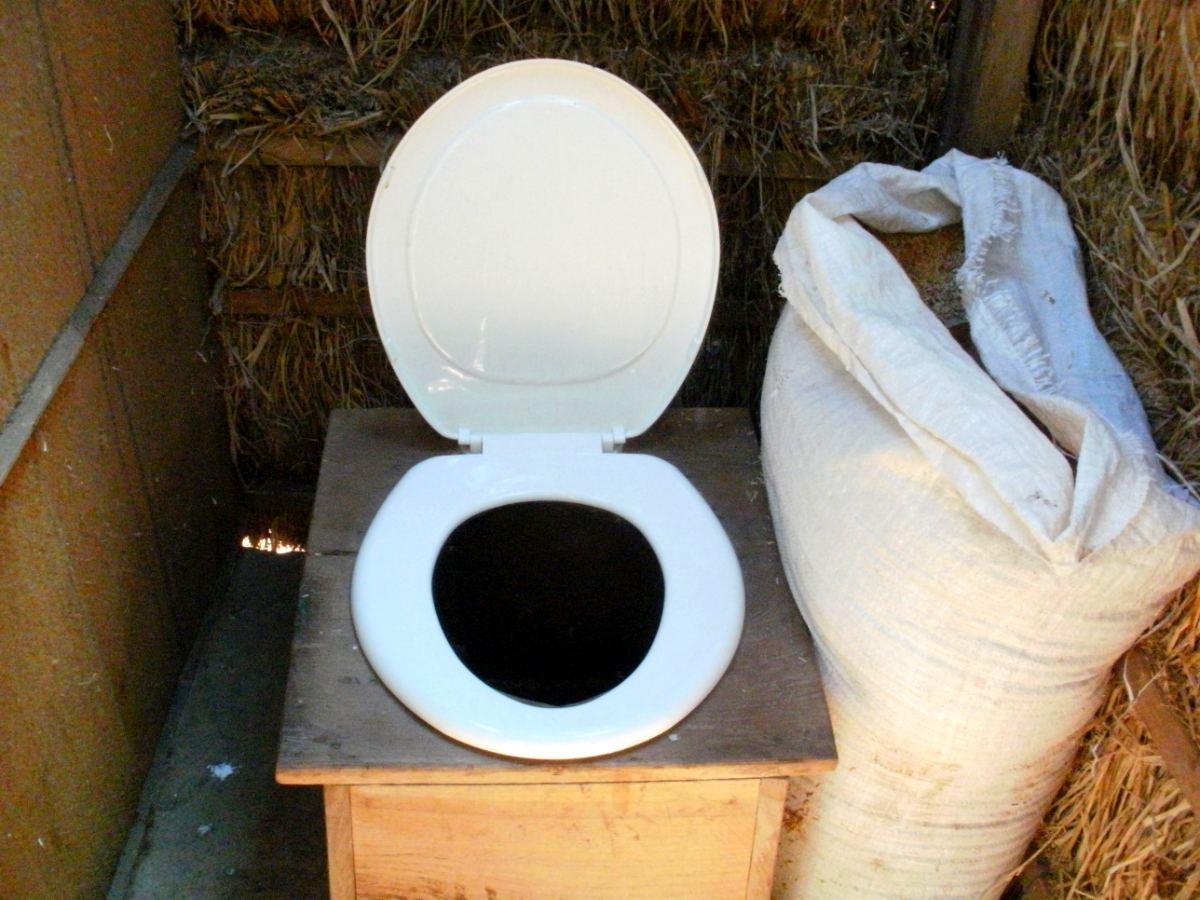
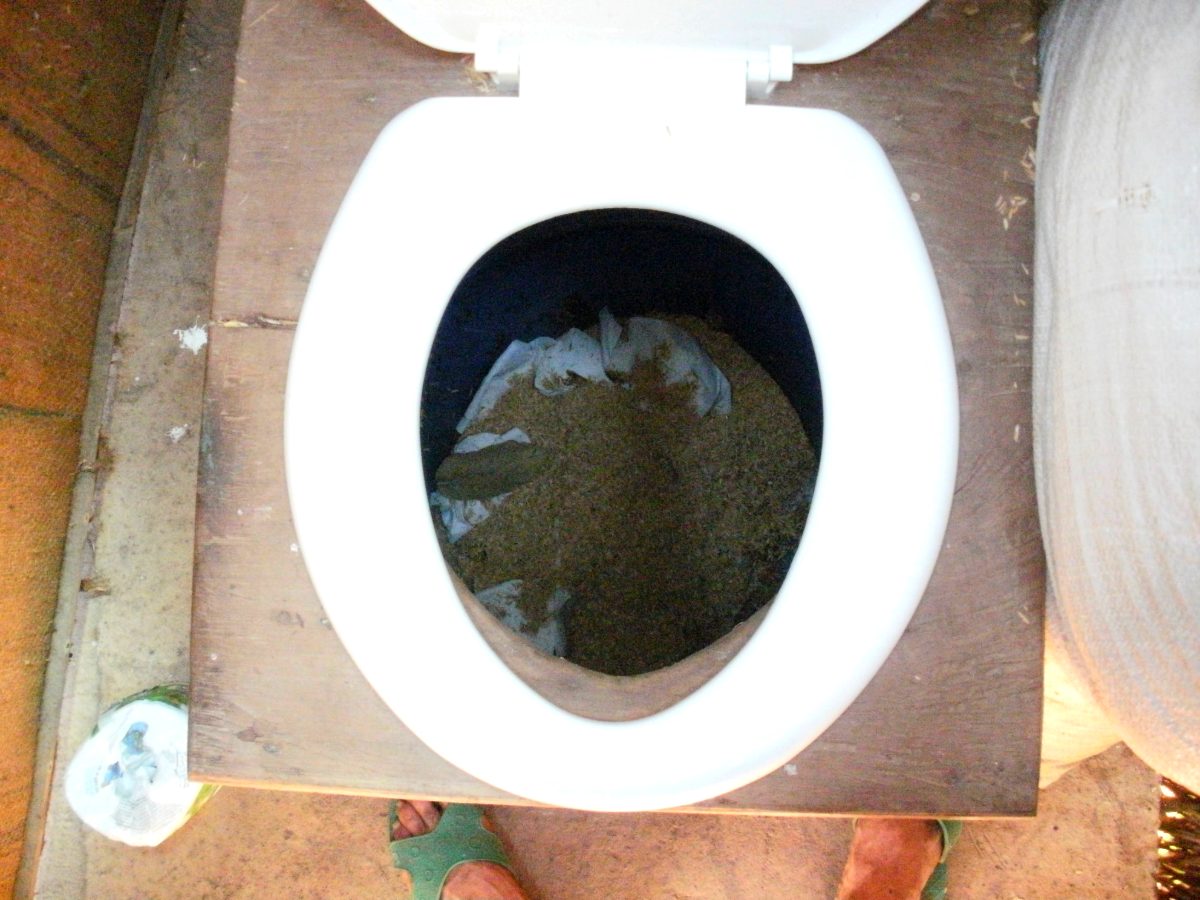
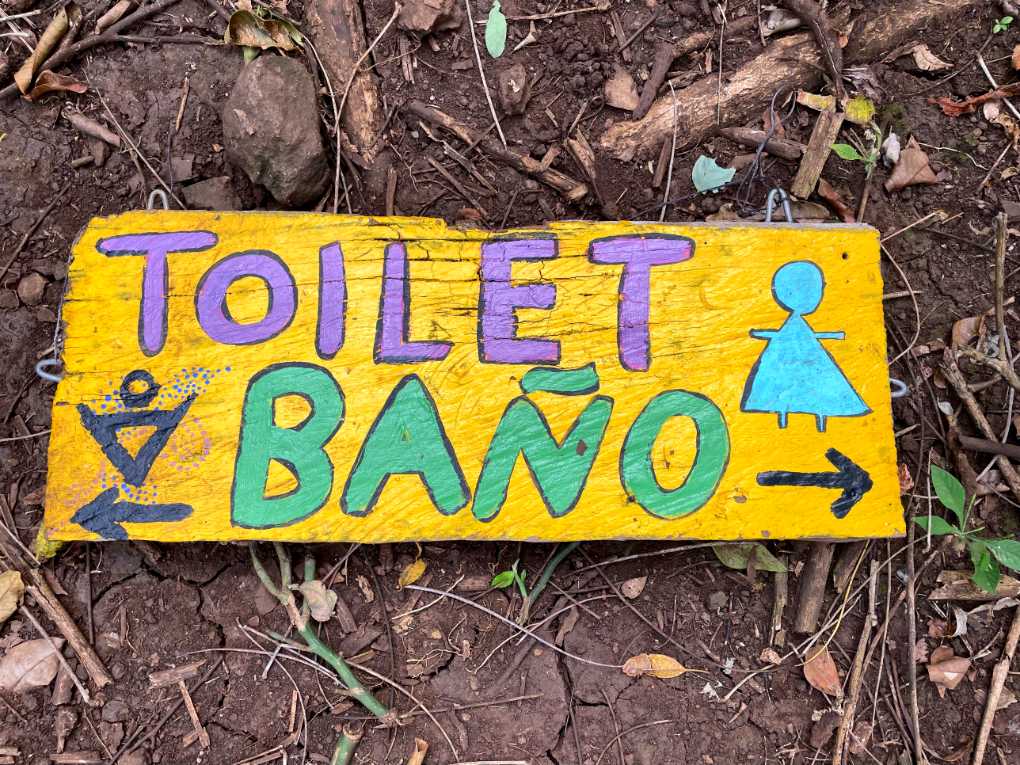
At El Zopilote eco hostel on Ometepe Island, every toilet is a compost toilet. No flush, no septic tank, no smell. Just a seat, a bucket of rice husks and a little care from everyone who stays with us.
Many guests feel a bit shy the first time. After a day or two, most of them tell us it is the most natural thing in the world.
Why a compost toilet makes sense on Ometepe
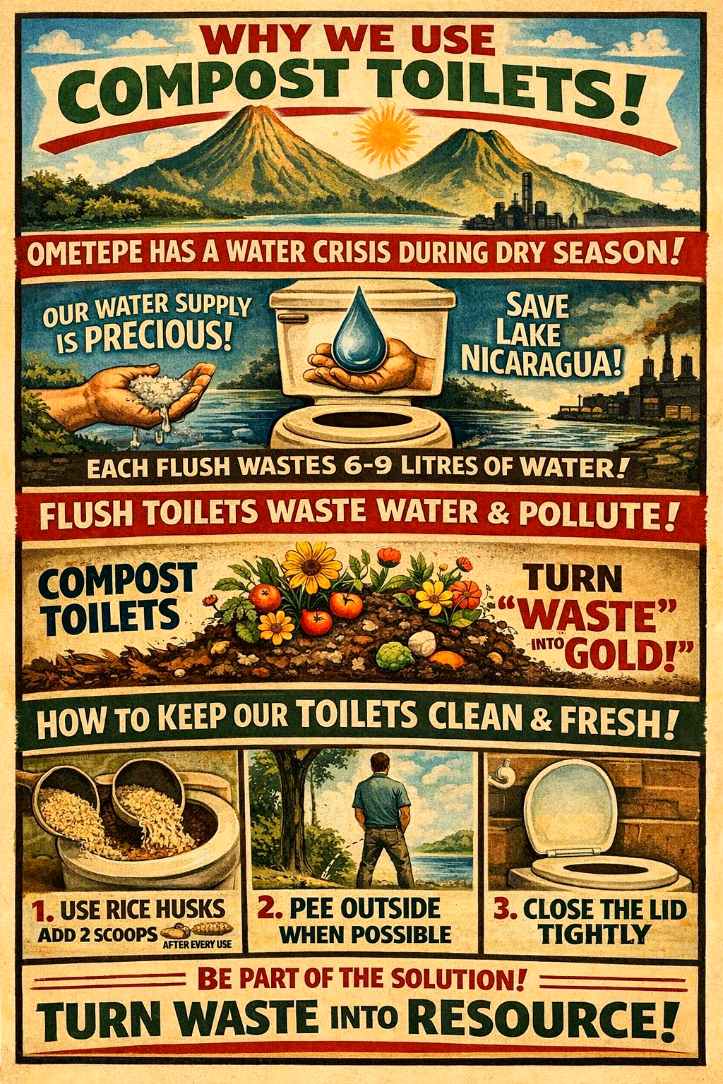
They save water. Every flush of a normal toilet uses 6 to 9 litres of clean water. Ometepe has a real water crisis in the dry season, and Nicaragua is one of the poorest countries in Latin America. Using clean water to carry away human waste is a luxury this island cannot afford.
They don’t pollute. Flush toilets and septic tanks leak into the ground and, sooner or later, into Lake Cocibolca, the great lake that surrounds our island. A compost toilet keeps everything out of the water.
They make fertilizer. What goes into a compost toilet is not waste. Composted well and left to rest long enough, it becomes rich soil for trees. As the poster in our toilets says: turn waste into gold.
How to use our compost toilets
- Add two scoops of rice husks after every use.
- Pee outside when possible. Less liquid means a drier, cleaner toilet.
- Close the lid tightly.
That’s all. The rice husks cover everything and keep the toilets clean and fresh.
How we make compost
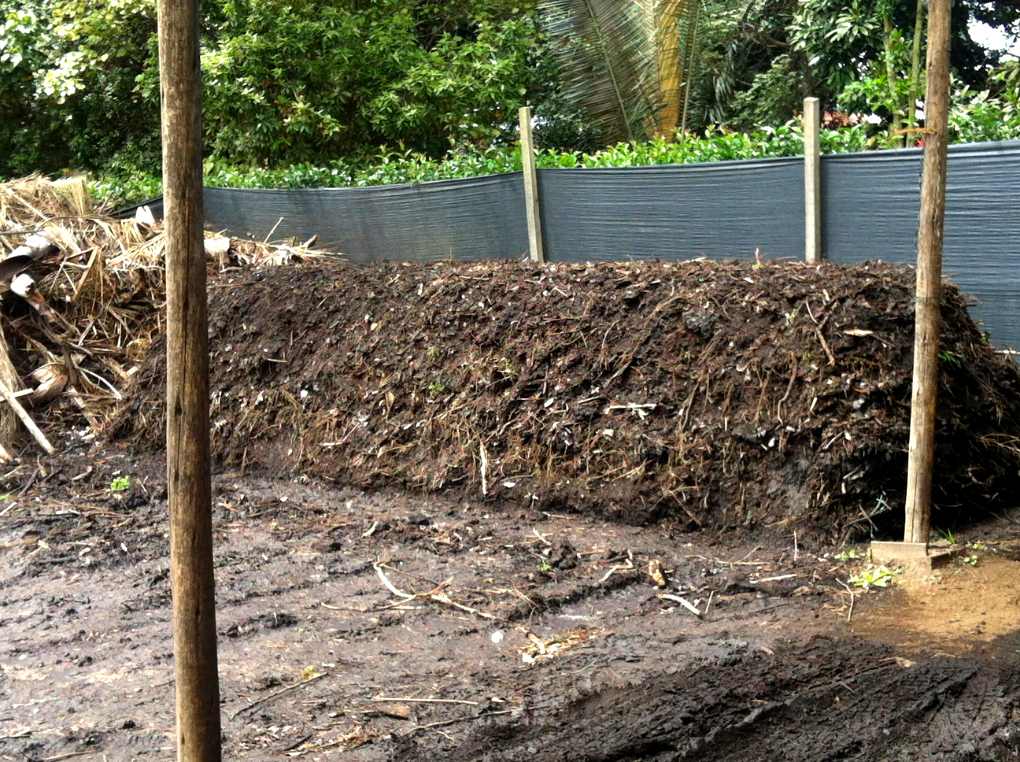
Compost is the heart of a permaculture farm. Kitchen scraps, leaves, grass, manure and everything that comes from the land goes back to the land.
The idea is simple. Mix green material, fresh and rich in nitrogen, with brown material, dry and rich in carbon. Keep the pile moist, let the air in and turn it from time to time. Bacteria and fungi do the rest, and after some weeks you have dark soil that smells like the forest.
On our YouTube channel there is a video where we show, step by step, how we make compost at El Zopilote. It is in Spanish, made for farmers across Latin America, but you will understand everything just by watching. You can watch it at the bottom of this post, after the photos.
Our worm bin: vermicompost with California red worms
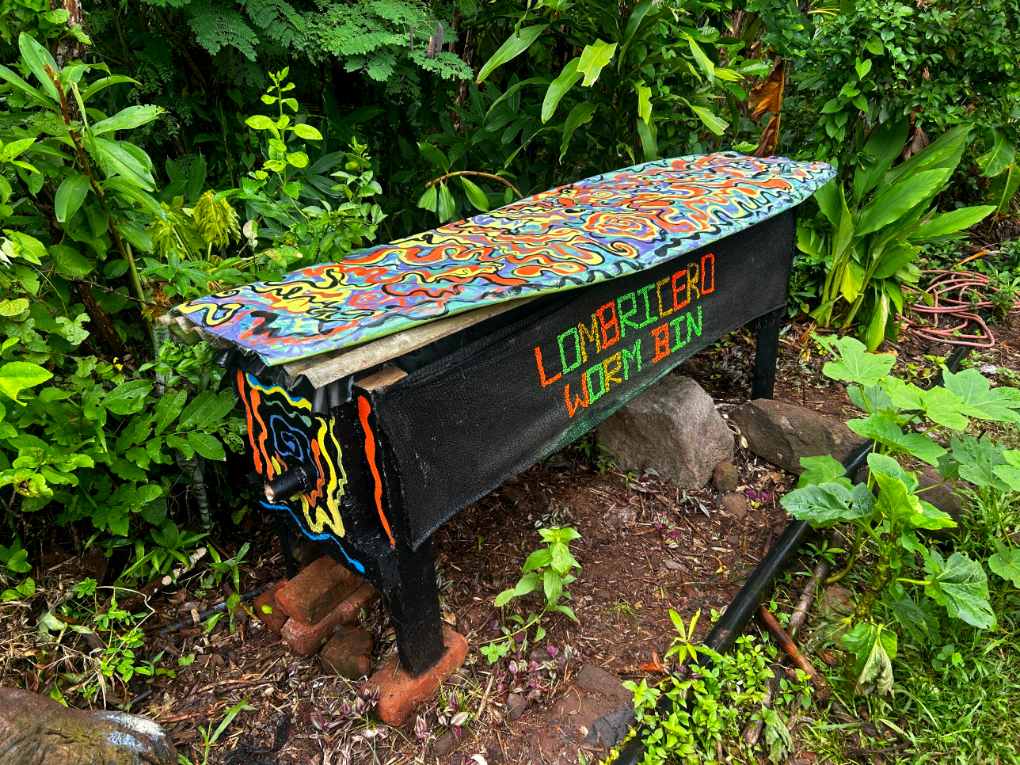
We also keep a worm bin, our lombricero. Inside live California red worms, the best worms for composting, and we feed them horse manure.
The worms eat the manure and turn it into vermicompost, also called worm castings, one of the richest natural fertilizers there is. It is gold for seedlings and young plants.
Come and see it for yourself
Compost toilets, compost piles and the worm bin are part of daily life at El Zopilote. You can see them on our Permaculture Farm Tour, free for guests. If you want to go deeper, join our Practical Permaculture School or come as a volunteer. And read how we recycle all our water with greywater phytodepuration.
Looking for an eco hostel on Ometepe where nothing goes to waste? Book your stay at El Zopilote.